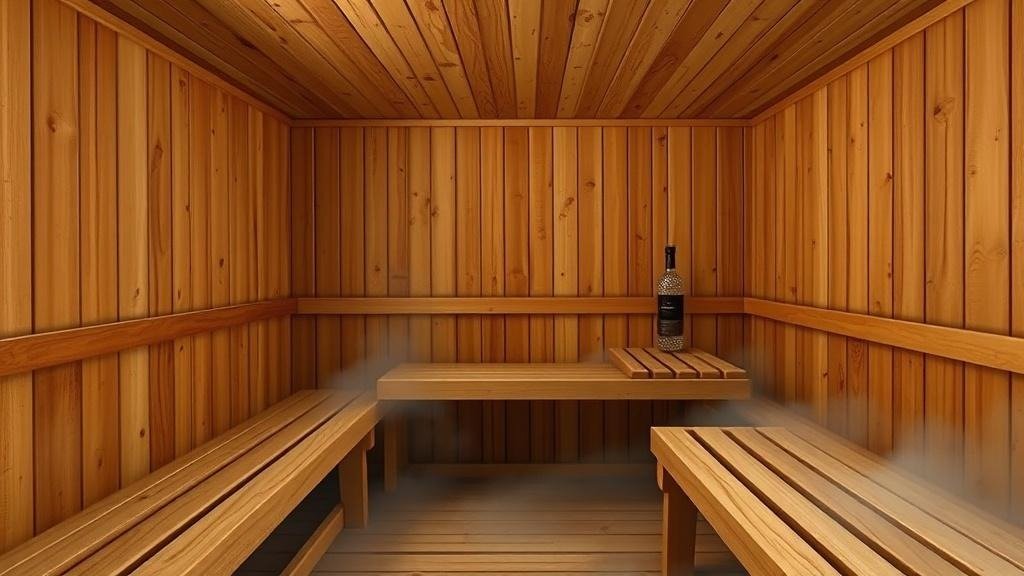
The right way to judge outdoor sauna complete guide is by how it will feel, fit, and hold up after the first month. Heat performance, electrical planning, materials, maintenance, and actual user habits matter more than showroom language.
My neighbor Craig spent all of last October building a barrel sauna on a gravel pad behind his detached garage in western Michigan. He’d done the research, picked a solid thermo-aspen kit, watched every YouTube assembly video twice. What he hadn’t done was check his main panel. When the electrician finally came out, the panel was full. No room for a 40-amp 240V breaker without a subpanel upgrade. That $3,800 kit turned into a $5,600 project before he’d even fired the heater, and he spent two extra weekends waiting on parts. Craig’s sauna is fantastic now. But his story captures something I see constantly: people obsess over the unit and sleepwalk through the install.
A barrel sauna is a real home upgrade. It pays back in daily use when the fundamentals are solid. Get the footprint right for your space, match the heater to the volume, build a proper pad, and route any 240V work through a licensed electrician. Most home builds land between $2,490 and $16,980 depending on size, wood species, and feature level. Everything below is the longer answer, with specs, research, install reality, and FAQs.
The Spec Sheet Stuff That Actually Matters
Most barrel sauna spec sheets list 15 to 20 data points. About five of them matter for your buying decision; the rest are marketing filler.
Start with length and diameter. A typical barrel runs 6 to 8 feet long with a 7-foot diameter, seating two to four people. Heater size is usually 6 kW, sometimes 7.5 kW on the bigger units. Heat-up time falls in the 25 to 35 minute range, which is meaningfully faster than a rectangular cabin of comparable volume (the curved shape reduces the cubic footage the heater has to fill, like heating a tent versus a room).
Wood species is the second thing to look at closely. Cedar, hemlock, thermo-aspen, and redwood are the standards. Pre-cut tongue-and-groove staves are what you want. Cheaper kits sometimes ship with butt joints sealed with felt strips. Those builds leak heat within the first season and look weathered by the second. If the listing doesn’t specify tongue-and-groove joinery, ask. If the answer is vague, move on.
Door hardware matters more than people expect. A poorly sealed door on a barrel sauna is like a window cracked open in January. Check that the door has a proper silicone or felt gasket and that the hinges are stainless or at least powder-coated.
If you’re also looking at cold-plunge equipment (many barrel sauna buyers end up there eventually), pay attention to chiller HP, filtration micron rating, and whether the unit includes ozone or UV sanitation. A 1/3 HP chiller can hold 50°F in a small insulated tub in a temperate climate. That same chiller will struggle badly in a hot garage in August.
See also: Advanced SEO Strategy 9096871221 for Ranking
What the Research Actually Shows
The most-cited sauna study is the Laukkanen 2015 cohort published in JAMA Internal Medicine. It followed 2,315 middle-aged Finnish men for 20 years and found a dose-response relationship between sauna frequency and reduced cardiovascular mortality. Men using a sauna four to seven times per week had roughly half the cardiovascular mortality of those using it once a week. That’s a striking number, but it comes with context: these were Finnish men with a lifetime sauna habit, not Americans who bought a barrel kit last Tuesday.
A 2018 follow-up from the same research group, published in BMC Medicine, reported lower dementia incidence at the highest sauna frequencies. The proposed mechanism involves heat acclimation, improved endothelial function, and a heart-rate response that resembles moderate-intensity exercise.
For a home user, 20-minute sessions at 170°F to 195°F, two to four times per week, is a reasonable starting point. Hydrate before and after. Step out if you feel lightheaded. And anyone with a cardiac history, uncontrolled blood pressure, or who is pregnant should talk to a physician before starting. The Finnish cohort data is encouraging, but “encouraging population data” and “safe for you specifically” are different conversations.
The Install Is Two Projects in One
Here’s where barrel sauna builds either go smoothly or sideways. The work splits into a carpentry half and an electrical half, and they require different skill sets.
The carpentry half. Most adults with basic tool competence can assemble a pre-cut barrel kit with a helper in a weekend. The staves lock together, the cradle supports the barrel, and the instructions (while sometimes poorly translated) are followable. This is the fun part.
The electrical half. A typical traditional sauna heater pulls 4.5 to 9 kW on a dedicated 240V circuit at 30 to 50 amps. This is not a weekend project. A licensed electrician should run the circuit, pull the permit, and tie into your main panel. Full stop. This is the step where cutting corners leads to house fires, not hyperbole.
The pad. Pad work comes before everything else. A 4-inch compacted gravel pad with proper drainage is sufficient for a barrel unit on flat ground. If you’re in a cold or wet climate, or building a heavier cabin-style sauna, a 4-inch reinforced concrete slab is the better call, running roughly $4 to $7 per square foot installed. A pad that settles or cracks after the unit is sitting on it costs far more to fix than doing it right the first time.
Ventilation. An outdoor barrel sauna needs an intake vent below the heater and an adjustable exhaust on the opposite wall near the ceiling. Indoor builds (garage conversions, basement installs) need a passive vent to the outside or a properly sized exhaust fan. Skip this and you get stale air, uneven heat, and moisture problems.
Permits. Some counties exempt detached structures under 200 square feet from building permits, but the electrical permit for a 240V circuit is almost always required regardless. Call your local building department before you order the kit. Not after.
The Real Cost, Not Just the Sticker Price
A barrel sauna purchase is the kind of buy where the all-in number is the only number that matters.
On the sauna side: $2,490 for an entry-level barrel kit, $6,000 to $10,000 for a mid-tier cabin with a quality heater, $12,000 to $16,980 for a panoramic glass-front or premium thermo-aspen build. Then add $400 to $900 for a gravel pad, $1,200 to $2,400 for a concrete pad, and $600 to $1,800 for the 240V electrical run.
Cold-plunge costs, for those going the full contrast-therapy route: $4,500 to $7,500 for a residential insulated tub with integrated chiller, $9,000 to $14,000 for a commercial-grade stainless build with full filtration. Stock-tank DIY setups come in at $400 to $900 but require manual ice, which gets old fast.
On resale value: appraisers don’t add dollar-for-dollar return on a sauna. But a well-built outdoor wellness setup is treated as a selling feature in Northeast and Pacific Northwest markets, similar to a finished outdoor kitchen or a quality fire pit area.
On the tax side: a residential sauna is rarely HSA or FSA eligible unless a clinician issues a Letter of Medical Necessity for a documented condition. Eligibility is patient-specific. Talk to your tax advisor before assuming a purchase qualifies.
How It Stacks Up Against the Alternatives
The honest comparison looks like this.
An outdoor barrel sauna heats in 25 to 35 minutes and lives on a small pad. An indoor cabin sauna heats faster but consumes living space and requires more complex venting. An infrared cabin runs at lower temperatures (120°F to 150°F) and plugs into a standard outlet, which is attractive, but produces a physiologically different response than a traditional sauna. The Laukkanen research was done with traditional Finnish saunas, not infrared panels.
Cold plunges split along similar lines. A purpose-built insulated tub with a 1 HP chiller holds 39°F to 45°F all day with zero ice. A stock-tank setup hits the same temps but you’re buying and hauling bags every session. A chest-freezer conversion is cheap and popular on Reddit, but it lacks filtration and is mechanically marginal at best.
My honest take: the right answer is almost never the cheapest unit and almost never the most expensive one. It’s the build that matches your climate, your space, your electrical situation, and the routine you’ll actually maintain three months from now. A $12,000 sauna that gets used once a month is a worse investment than a $3,500 barrel that gets fired up four nights a week.
Once you’re past the big-picture decisions, the next step is comparing specific models and price tiers side by side. The most thorough barrel sauna breakdown I keep recommending is this resource, which walks through specs, pricing, and installation considerations for a home setup. Worth bookmarking before you commit to a build.
FAQs
What is the lifespan of a quality barrel sauna?
A well-built cedar or thermo-aspen barrel sauna lasts 15 to 25 years with light annual maintenance (sanding weathered spots, resealing the exterior, replacing rocks). Heaters typically need replacement once during that span. Stainless-steel cold-plunge tubs last 15 to 20 years; chillers are usually replaced or rebuilt every 6 to 10 years.
Do I need a permit for a barrel sauna?
Some municipalities exempt detached structures under 200 square feet from building permits. The electrical permit for a 240V circuit is almost always required. Call your local building department before ordering.
How quickly does a barrel sauna heat up?
A 6 kW barrel sauna reaches 170°F in 25 to 35 minutes. A 7.5 kW cabin sauna hits the same temperature in 30 to 45 minutes. Cold-plunge chillers pull a freshly filled tub from tap temperature to 45°F in 3 to 8 hours depending on chiller size, insulation, and starting temp.
How long should a typical barrel sauna session last?
Most adults land between 12 and 20 minutes at 170°F to 195°F. For cold plunges, 2 to 5 minutes at 40°F to 55°F is the common range. Build up gradually if you’re new to either practice.
Can I install a barrel sauna on a deck?
Some smaller barrel units can sit on reinforced decks if the framing supports the loaded weight (often 600 to 1,200 lbs). Larger cabin units belong on a dedicated pad. Confirm load capacity with a structural engineer or your contractor before placing any unit on existing decking.
Disclaimer. This article is general consumer information, not medical advice. Heat and cold therapies carry real cardiovascular load. Anyone with arrhythmias, uncontrolled hypertension, Raynaud’s phenomenon, recent cardiac events, or who is pregnant should consult a physician before starting any new sauna or cold-plunge routine.
Any 240V electrical work should be completed by a licensed electrician under the appropriate local permit.
HSA and FSA reimbursement on wellness equipment is patient-specific and depends on a Letter of Medical Necessity from a clinician. Talk to your tax advisor before assuming a purchase qualifies.